

CEX vs DEX: The Real Reason Most Trading Tools Can’t Do Both
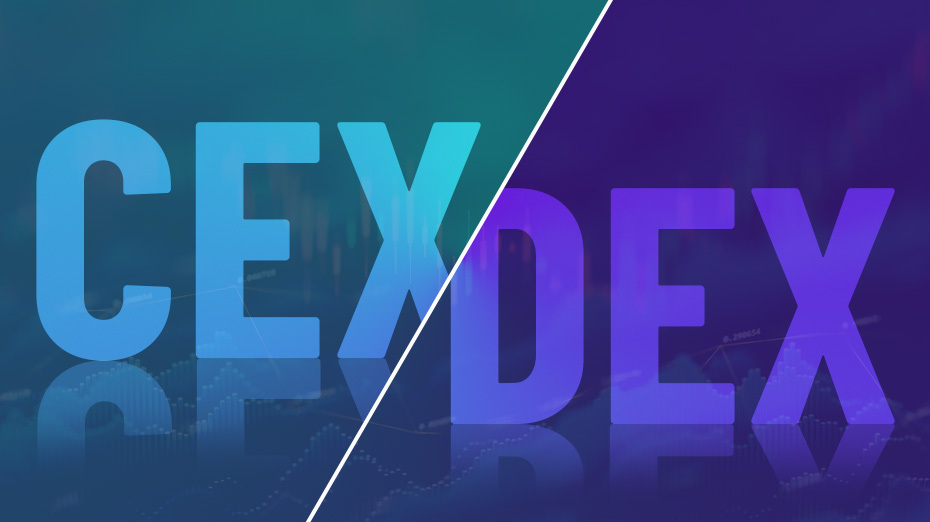
In crypto trading, exchanges fall into two broad categories: centralized (CEXs) and decentralized (DEXs). Each has strengths and trade-offs: custodial vs. non-custodial, liquidity vs. autonomy, user experience vs. transparency. But many traders seek access to both CEX and DEX trading from within a single system. That’s where complexity lies, and where most tools fall short.
Below, we break down:
- What makes CEXs and DEXs different
- Why supporting both is so challenging
- How a unified platform changes the game
- Where AstraBit fits in as a solution
- What this means for traders
- How this shapes the future of trading
1. CEX vs DEX Key Differences
Each exchange type solves different problems and comes with trade-offs that affect custody, liquidity, accessibility, and regulation.
Custody & Control
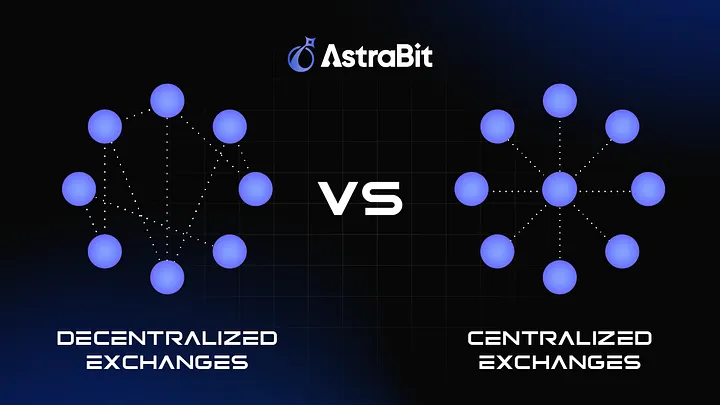
Centralized exchanges require you to deposit funds (custody) in their wallets. You trust them to secure, manage, and facilitate trades.
In contrast, decentralized exchanges (DEXs) use smart contracts instead of custodial wallets. Funds are deposited into a contract that enables interaction with a protocol’s interface and trading functions, but you retain control of your private keys and can interact directly with the contract if needed. If a DEX interface goes offline or withdrawals pause, you can still manually access your funds through the smart contract. That level of direct access isn’t possible with centralized exchanges, where custody remains with the operator.
Liquidity & Speed
CEXs typically offer deeper liquidity, making it easier to execute large trades without major slippage. Their internal matching engines are optimized for speed.
DEXs often rely on automated market makers (AMMs) or liquidity pools. While they provide open access, liquidity can be fragmented, especially for niche tokens, leading to higher slippage or less favorable pricing.
User Experience & Accessibility
CEXs often provide fiat on-ramps, intuitive interfaces, customer support, and familiar trading workflows. They appeal to users who want simplicity.
DEXs are more technical: users need to understand wallets, gas fees, approval flows, and slippage settings. Mistakes can be costly, especially for new users.
Regulation & Verification
CEXs commonly require KYC/AML verification due to regulatory obligations, especially for fiat interactions. DEXs generally allow permissionless trading, though that often means less oversight or recourse in cases of fraud or hacks.
Because of these fundamental trade-offs, most platforms specialize in either CEX or DEX—very few do both well.
2. Why Many Tools Struggle to Support Both
Building a multi-exchange trading platform that truly supports both CEX and DEX trading means overcoming complex engineering, UX, and compliance hurdles:
API & Integration Complexity
Each exchange, centralized or decentralized, has its own APIs, protocols, and quirks. Maintaining these integrations across multiple systems is resource-intensive and prone to errors.
Liquidity Management
Aggregating liquidity across exchanges requires reconciling slippage, partial fills, and variable order routing. Balancing execution quality while minimizing latency is a constant challenge.
Security & Keys
On the DEX side, you must securely interact with smart contracts, manage gas, and protect private keys. On the CEX side, custody integrations introduce additional layers of security and compliance requirements.
User Experience
Delivering both exchange types within one intuitive interface is difficult. Users expect consistency, but under the hood, every system behaves differently.
Risk & Compliance
Tracking funds, ensuring transparency, and maintaining regulatory compliance, especially when bridging assets, is exponentially harder across centralized and decentralized infrastructures.
Because of these challenges, most platforms pick a side and stay there.
3. Why Multi-Exchange Capability Changes the Game
When a multi-exchange trading technology platform connects both CEX and DEX environments effectively, the benefits extend beyond convenience, offering traders greater flexibility across exchange types.
Access and Flexibility
Traders gain the freedom to choose where and how they execute based on liquidity, fees, or token availability. This flexibility enables them to pursue opportunities that would otherwise require multiple tools or accounts.
Arbitrage and Efficiency
Price differences between exchanges can appear and disappear quickly. Multi-exchange access enables traders to view and respond to these variations in real time, improving visibility across markets.
Unified Portfolio View
Instead of logging into multiple systems and reconciling balances manually, users can monitor their total performance, allocation, and exposure from one dashboard. A unified view supports better decision-making and faster reactions.
Seamless Experience
Whether trading manually or through automation, users benefit from a consistent interface. Strategy deployment, position management, and portfolio analysis happen within a single, integrated environment.
Strategic Growth
For platforms, supporting both CEX and DEX access broadens market reach. It appeals equally to those who value centralized convenience and those who prioritize decentralized autonomy—bridging two user bases that are often siloed.
4. How AstraBit Delivers on That Promise
AstraBit is a multi-exchange trading technology platform that connects users to CEX and DEX venues within a single environment, bringing automation, analytics, and DeFi access together in one cohesive experience.
Unified Dashboard
Manage, monitor, and trade across multiple exchange types from a single interface.
Automated and Manual Trading
Run algorithmic strategies or make discretionary trades securely, without switching tools.
Portfolio Analytics
Track performance, assess risk, and see your entire portfolio at a glance.
DeFi Integrations
Through AstraBlox, users can access DeFi modules such as bridges, swaps, yield strategies, and tokenized vaults—connected through AstraBit’s ecosystem and gradually rolled out.
By combining CEX and DEX access with built-in automation and analytics, AstraBit significantly reduces the friction that typically comes with managing both.
5. What This Means for You as a Trader
AstraBit helps traders manage activity across multiple exchanges by connecting to both centralized (CEX) and decentralized (DEX) venues within a single environment.
- Execute across CEXs and DEXs without switching tools.
- Consolidate access in one place to simplify workflows.
- Use automation tools to streamline activity while maintaining control of trading decisions and risk management.
- View overall portfolio allocation and performance through a unified dashboard.
- Stay informed and responsive to changing market conditions from one interface.
6. How This Shapes the Future of Trading
Trading across CEX and DEX venues is becoming increasingly common as traders look for more integrated ways to manage digital assets. AstraBit acts as the trading technology layer that connects those venues within a single environment. Doing this effectively requires robust infrastructure, intuitive design, and a compliance-first framework—areas where many existing platforms continue to evolve.
AstraBit is designed to bridge these environments. By connecting trading, portfolio analytics, and DeFi functionality within a single, cohesive dashboard, AstraBit is positioned to support the growing convergence of centralized and decentralized finance.
As the market develops, hybrid platforms like AstraBit may play an important role in shaping how traders access and interact with digital assets. The goal is to make that interaction more transparent, compliant, and user-driven—not to promise specific performance or outcomes.
Disclosure:
Trading digital assets involves significant risk and may result in the loss of your invested capital. AstraBit provides tools and analytics for informational and trading facilitation purposes only and does not guarantee performance or profitability. Users remain responsible for all trading decisions and risk management. Past performance of any strategy does not guarantee future results. Please consult a licensed financial professional before using AstraBit products or services.
Share this post


Related Posts
Centralized (CEX) vs Decentralized (DEX) Exchanges
Centralized vs. Decentralized Crypto Exchanges: Making an Informed Choice with AstraBit In the rapidly evolving world of cryptocurrency, choosing the right exchange is one of the most critical decisions a trader can make. The choice between Centralized Exchanges (CEXs) and Decentralized Exchanges (DEXs) is more than just a technical one — it’s a reflection of […]

Cam Paulding
26 Oct 2025 • 5 min read